What Should the Readings of Barometric Pressure in a Car Diagnostic Mean?
Reading Time: 4 minutes
The manifold air pressure (MAP) sensor and barometric pressure level (BARO) sensor are two of the nigh crucial sensors in your engine (ofttimes, they're integrated into a single sensor). Simply like any other vehicle component, it isn't uncommon for these sensors to malfunction.
P0129 is just one of several engine trouble codes related to an issue in these sensors. Read on to larn more most this trouble lawmaking.
What Does the P0129 Lawmaking Mean?
Diagnostic trouble code (DTC) P0129 stands for "Barometric Pressure Besides Low." It is logged once the powertrain control module (PCM) perceives a low pressure (below manufacturer-specified limit) reading from either the MAP or BARO sensor.
The chief office of a MAP sensor is to monitor engine load. It's designed to react to pressure changes in the engine manifold. The voltage signal from this sensor is expected to vary every bit the engine load changes. An engine that is under load is expected to take greater pressure level than a coasting engine.
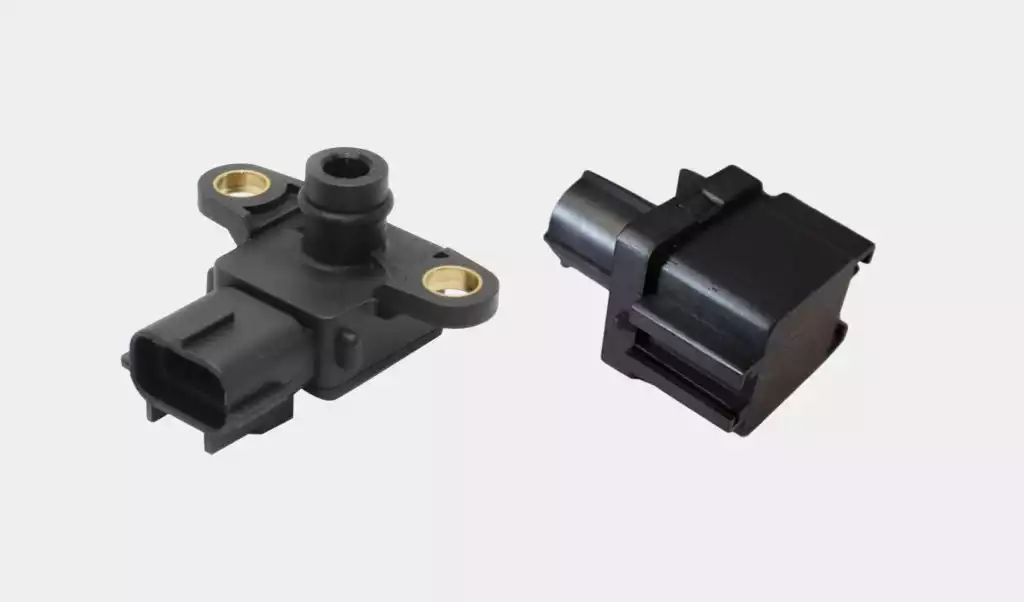
A BARO sensor works just like a MAP sensor. The only difference is that BARO sensors are designed to detect more subtle changes in atmospheric air pressure. In many cases, the two sensors are integrated together.
A MAP sensor is usually connected to the manifold, while a BARO sensor is vented directly to the atmosphere.
These sensors use voltage signals to communicate with the PCM. A BARO sensor is typically supplied with a reference voltage, a battery footing, and output excursion(s). Resistance in the BARO sensor is expected to vary depending on the changes in atmospheric pressure. This variation in resistance causes the sensor'southward voltage output to change.
The ECM/PCM uses this data for correct fuel injection and ignition timing. Once the PCM perceives that the voltage signal from the BARO/MAP sensor is too low, information technology will trigger the P0129 code.
Make sure that you understand how MAP and BARO works earlier attempting any DIY troubleshooting of code P0129.
Annotation: The definition of code P0129 may be different depending on the vehicle manufacturer. Consult the appropriate repair manual or repair database for the exact code definition.
What are the Possible Causes of the P0129 Code?
Here are some possible triggers of this engine lawmaking:
- Wiring or connector issues
- Lack of engine vacuum (due to engine wear, ignition misfire, or chock-full cat-con)
- Faulty MAP or BARO sensor
- Malfunctioning PCM

What are the Common Symptoms of a P0129 Code?
Hither are the possible symptoms of a P0129 code:
- Activated check engine light
- Poor engine performance
- Engine hesitation (upon dispatch)
- Increased fuel consumption
How to Diagnose the P0129 Lawmaking
Diagnosing a P0129 code tin prove challenging. Given that at that place are many listed triggers of this mistake code, it may be difficult for you lot to pinpoint what is really causing the event. If yous don't have the appropriate skills and tools for the chore, it's best to take your vehicle to an auto repair store. A mechanic would know how to properly diagnose the upshot.
If you lot're an experienced DIYer and yous want to try to diagnose this code yourself, we recommend consulting vehicle-specific repair manuals or online repair databases. Virtually of the time, these resource incorporate helpful data on how to diagnose vehicle issues.
How to Set the P0129 Code
In that location is no one fix for a P0129 code. BARO and MAP sensor designs may vary significantly per vehicle manufacturer. For instance, repair steps for a P0129 code on a Jeep Grand Cherokee may non work for a lawmaking P0129 on a Chrysler Pacifica.
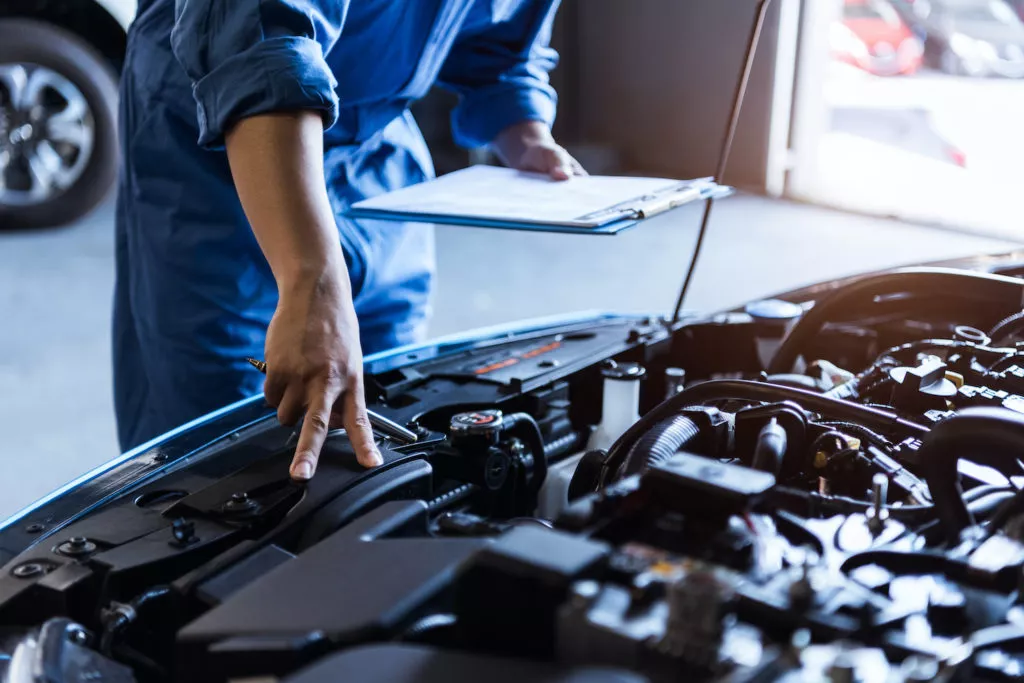
If you lot program on fixing the underlying issue on your own, we recommend consulting a vehicle-specific repair manual. This is a reliable source of data, which can help you decide the appropriate repair process for sensor malfunctions. Alternatively, y'all may subscribe to an online repair database.
MAP, BARO, and OBD Codes
Air pressure at sea level is 14.7 psi, which is equivalent to 29.92 Hg (inches of mercury measured using a particularly designed graduated scale on a tube filled with mercury).
Manifold absolute pressure is measured on the Hg scale so that MAP is the reverse of manifold vacuum. Thus, when y'all add manifold vacuum and manifold pressure together, you get barometric pressure. For case, if an engine has xviii inches Hg of vacuum and ambience barometric pressure level is 30 Hg, and then the manifold absolute force per unit area is 12 inches Hg.
Barometric pressure is a pregnant factor in air-fuel calculations as well as ignition timing. With lower barometric force per unit area (BARO), less fuel is required just more than time is needed for combustion, so timing is advanced and fuel commitment is adjusted accordingly. Typically, since the force per unit area in the manifold is the same as barometric (atmospheric) pressure when the engine isn't running, the BARO pressure is measured between key on and engine start. On vehicles with a stand-lone BARO sensor (such as on supercharged and turbocharged vehicles), the BARO pressure level is measured whatsoever time the key is on whether the engine is running or non.
And even on systems with an integrated MAP/BARO sensor, the BARO reading is updated during high-load Broad Open Throttle (WOT) events.
Engineers who write algorithms know this, and and so they include algorithms to bank check the integrity of the sensor and its circuits, and it typically checks the MAP sensor with the primal on and the engine non running. If the MAP reading falls below the acceptable range, a code like P0129 is fix.
Any information provided on this Website is for informational purposes only and is non intended to replace consultation with a professional mechanic.
Source: https://www.carparts.com/blog/p0129-code-barometric-pressure-too-low/
0 Response to "What Should the Readings of Barometric Pressure in a Car Diagnostic Mean?"
Publicar un comentario